
As part of the Erasmus+ Group Mobility Program, we will be hosting students from the WFO Franz Kafka School in Merano, Italy, and the Liceul Teoretic Mikes Kelemen in Sfântu Gheorghe, Romania, during the week of November 16–20, 2026.
The initiative is aimed at students enrolled in intermediate-level vocational training programs in the field of administration, as well as at faculty members at the three schools, and focuses on raising awareness of and promoting the minority languages spoken in the participating regions: Basque, the languages native to the Merano area in Italy, and Hungarian from the Romanian region of Transylvania.
Beyond cultural exchange, the project aims to promote shared learning and an understanding of different teaching and work models in vocational education. Teachers will have the opportunity to gain firsthand insight into the educational methodologies of the participating schools, exchange best practices, and share professional experiences.
A major organizational effort by the Department of Administration and Finance, together with the Internationalization and Normalkuntza teams, ensures a packed schedule of events, including a tour of our facilities—where we compare different ways of learning—a reception hosted by our mayor, Mari Jose Blanco, in the plenary hall of the Portugalete City Council, and a visit to Gernika, among others.
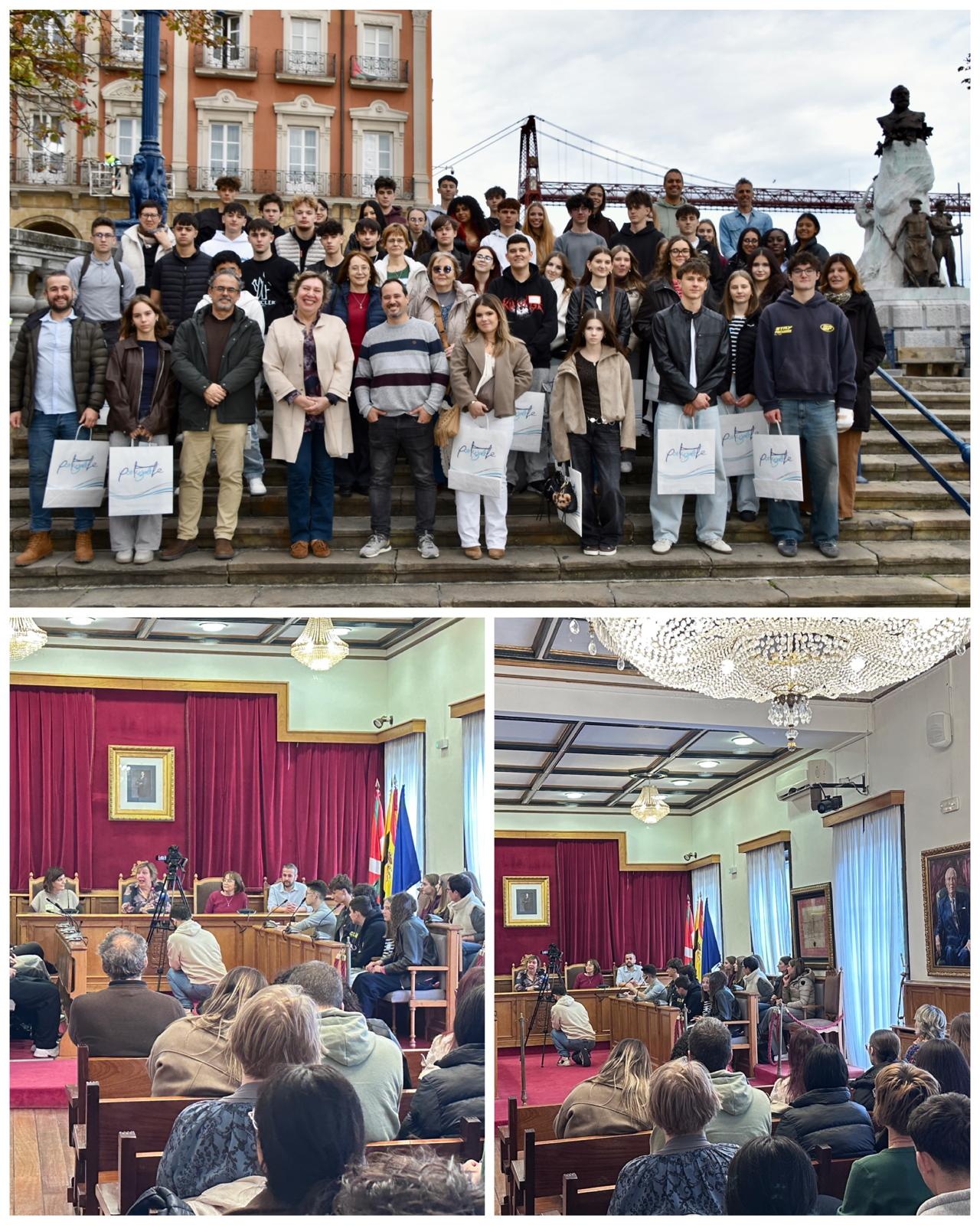
And, as one would expect, the Normalkuntza team has organized an “Euskararen Eguna” so that our visitors can experience those other aspects of our culture that are more closely tied to folklore, sports, and gastronomy.
For students, these exchange programs offer an opportunity to broaden their horizons, improve their language skills—especially in English—learn about other cultures, and develop personal and professional skills in an international setting.
One of the key strengths of this initiative is the creation of an international collaborative network among educational institutions that can continue to grow and incorporate new European institutions in future editions.
The goal is to build a rewarding and lasting partnership that will enable the sharing of knowledge, open up new mobility opportunities for students and faculty, and raise the profile of the school and Portugalete on the European stage.
Furthermore, the project will help raise awareness in Italy and Romania of the culture, identity, and sociolinguistic reality of Portugalete and the Basque Country, with the Basque language as one of its key distinguishing features.
This first initiative therefore represents an important step toward the internationalization of vocational training in Portugalete and its integration into European educational cooperation networks, with a commitment to training that is more open, intercultural, and connected to the opportunities offered by Europe.